
Cellar-aged Rishiri kombu 30g
Couldn't load pickup availability
Highlights
Highlights
・[A Vintage Umami Masterpiece] Harvested in the northernmost islands of Hokkaido (Rishiri and Rebun), this thick, premium natural kelp is cellar-aged for over a year. This special aging process removes any seaweed odor, concentrating its natural glutamic acid to deliver a profound aroma and deep umami.
・[Elegant, Crystal-Clear Dashi] Trusted by traditional high-end Kyoto restaurants, this kelp creates a refined, clear broth with no harshness. It’s the perfect secret ingredient for soups, miso soup, ramen, udon, hot pots, and stews. You can even slice it thinly to eat it directly!
・[How to Extract the Perfect Flavor] Use 10g of kelp per 300-500ml of water. Simmer at 60°C (140°F) for 30-60 minutes, removing it just before boiling to prevent bitterness. Cold brew takes 6-10 hours. Note: Do not wash off the white powder on the surface—it is natural mannitol (sweet umami)! Simply wipe it gently.
・[Healthy, Low-Sodium Vegan Superfood] The rich, natural umami enhances the flavor of your dishes, helping you effortlessly reduce your salt intake. Low in calories, it is packed with essential nutrients like potassium, calcium, dietary fiber, iron, and iodine.
・[Digestive Support for Everyday Health] Cooking this kelp alongside beans helps reduce the digestive burden on your stomach. Incorporate this versatile ingredient into your daily diet for both an authentic Japanese culinary experience and exceptional health benefits.
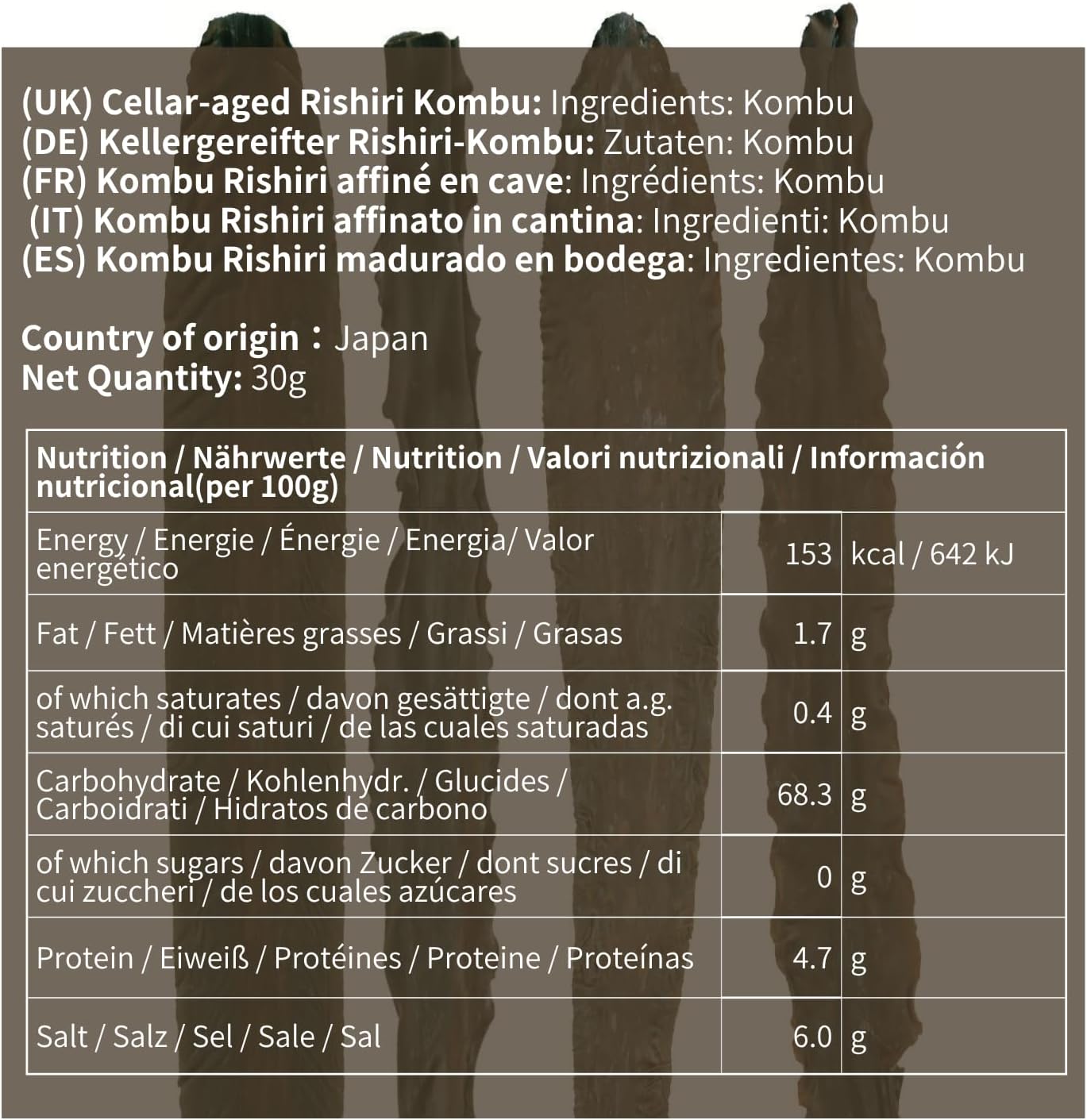
Net Weight
Net Weight
30g
Suggested Use
Suggested Use
・Basic Ingredients
Water: 300–500 ml
Kombu (Dried Kelp): 10g
※Gently wipe surface dirt with a tightly wrung damp cloth
・Brewing Methods (Choose one)
Cold: Steep in fridge 6–10 hrs; remove kelp. (Clean umami)
Hot: Steep at ~60°C for 30–60 mins; never boil. (Rich aroma)
・Take It to the Next Level
Add 10g bonito flakes to the kombu stock, simmer just below boiling for 10 mins, and strain for an authentic Japanese flavor.
Ingredients
Ingredients
Kombu
Storage
Storage
Store in a cool, dry place.
Country of Origin
Country of Origin
Japan, Hokkaido

How to Make Authentic Kombu Dashi
Die Tastrip Kellergereifter Rishiri Kombu wurden mir zur Verfügung und zum Testen gestellt.Positiv- Product of Japan- Die Packung ist wiederverschließbar- Einfache Anwendung- Grundlage für die Dashi-Brühe- Sehr angenehmer Geschmack- Angenehmes AromaNeutral- MHD ca. 1,5 Jahre- 10 Stück in der Verpackung á 3 gNegativ- Anwendungsanleitung nur auf der Produktseite- Leider keine BIO-QualitätPreis/Leistung ist gut. Kaufempfehlung5 Sterne
Good flavour if your really into making your own tradition dashi
This is not the cheapest generic dried seaweed, and that is really the point. It is Rishiri kombu from Japan and is specifically described as cellar-aged, so this is very much a premium version of the ingredient rather than simply a basic packet of dried kelp.The packet is clearly labelled and the ingredient list is reassuringly simple: just kombu. The pieces themselves look substantial and well handled rather than shredded or broken into small fragments, and the overall presentation gives the impression of a traditional Japanese product rather than a generic imported seaweed.Rishiri kombu is particularly prized for making dashi because it gives a clean, refined umami flavour, and the cellar-ageing is intended to further develop and mellow that character. I would not necessarily assume that makes it nutritionally superior to cheaper kombu, but in terms of provenance, handling and culinary quality, this is clearly at the higher end of the scale.The packet also gives useful guidance about storage and notes that a white powdery bloom may naturally appear on the surface. That is not mould, but part of the natural umami-rich compounds in the kombu.This is dried kombu rather than something ready to eat straight from the packet, so it is best suited to rehydrating and using for dashi, soups and other Japanese dishes. It is also worth remembering that kombu can naturally contain a very high amount of iodine, although this particular packet does not state an iodine figure, so I would treat it as a food ingredient rather than something to use casually as an iodine supplement.It is quite expensive for just 30 g, although that is partly what I would expect from a specialist Japanese ingredient of this quality being sold in the UK. It would undoubtedly be cheaper and easier to buy in Japan, but for me the more relevant question is whether the quality justifies the premium here, and I think it largely does.Overall, I think this is a high-quality example of its type. It is more expensive than basic dried kelp, but you are paying for the specific Rishiri variety, Japanese origin and cellar-ageing rather than simply for dried seaweed. For someone who appreciates good ingredients and wants to make proper dashi, I think it is excellent.
- 5 stars: 3 (100%)
- 4 stars: 0 (0%)
- 3 stars: 0 (0%)
- 2 stars: 0 (0%)
- 1 star: 0 (0%)
Die Tastrip Kellergereifter Rishiri Kombu wurden mir zur Verfügung und zum Testen gestellt.Positiv- Product of Japan- Die Packung ist wiederverschließbar- Einfache Anwendung- Grundlage für die Dashi-Brühe- Sehr angenehmer Geschmack- Angenehmes AromaNeutral- MHD ca. 1,5 Jahre- 10 Stück in der Verpackung á 3 gNegativ- Anwendungsanleitung nur auf der Produktseite- Leider keine BIO-QualitätPreis/Leistung ist gut. Kaufempfehlung5 Sterne
This is not the cheapest generic dried seaweed, and that is really the point. It is Rishiri kombu from Japan and is specifically described as cellar-aged, so this is very much a premium version of the ingredient rather than simply a basic packet of dried kelp.The packet is clearly labelled and the ingredient list is reassuringly simple: just kombu. The pieces themselves look substantial and well handled rather than shredded or broken into small fragments, and the overall presentation gives the impression of a traditional Japanese product rather than a generic imported seaweed.Rishiri kombu is particularly prized for making dashi because it gives a clean, refined umami flavour, and the cellar-ageing is intended to further develop and mellow that character. I would not necessarily assume that makes it nutritionally superior to cheaper kombu, but in terms of provenance, handling and culinary quality, this is clearly at the higher end of the scale.The packet also gives useful guidance about storage and notes that a white powdery bloom may naturally appear on the surface. That is not mould, but part of the natural umami-rich compounds in the kombu.This is dried kombu rather than something ready to eat straight from the packet, so it is best suited to rehydrating and using for dashi, soups and other Japanese dishes. It is also worth remembering that kombu can naturally contain a very high amount of iodine, although this particular packet does not state an iodine figure, so I would treat it as a food ingredient rather than something to use casually as an iodine supplement.It is quite expensive for just 30 g, although that is partly what I would expect from a specialist Japanese ingredient of this quality being sold in the UK. It would undoubtedly be cheaper and easier to buy in Japan, but for me the more relevant question is whether the quality justifies the premium here, and I think it largely does.Overall, I think this is a high-quality example of its type. It is more expensive than basic dried kelp, but you are paying for the specific Rishiri variety, Japanese origin and cellar-ageing rather than simply for dried seaweed. For someone who appreciates good ingredients and wants to make proper dashi, I think it is excellent.
Good flavour if your really into making your own tradition dashi