
Kellereigelagerter Rishiri Kombu 30g
Verfügbarkeit für Abholungen konnte nicht geladen werden
Highlights
Highlights
・[Ein Vintage-Umami-Meisterwerk] Diese dicke, hochwertige natürliche Kombu-Alge stammt von den nördlichsten Inseln Hokkaidos (Rishiri und Rebun) und wird über ein Jahr lang im Keller gereift. Dieses besondere Reifungsverfahren entfernt jeglichen Algen-Geruch und konzentriert die natürliche Glutaminsäure, um ein intensives Aroma und tiefes Umami zu liefern.
・[Eleganter, kristallklarer Dashi] Von traditionellen, gehobenen Restaurants in Kyoto geschätzt, ergibt diese Kombu-Alge eine raffinierte, klare Brühe ohne scharfe Noten. Sie ist die perfekte Geheimzutat für Suppen, Misosuppen, Ramen, Udon, Hot Pots und Eintöpfe. Sie können sie sogar dünn schneiden und direkt essen!
・[So entlocken Sie das perfekte Aroma] Verwenden Sie 10 g Kombu-Alge auf 300–500 ml Wasser. Lassen Sie es bei 60 °C (140 °F) 30–60 Minuten köcheln und nehmen Sie die Alge kurz vor dem Kochen heraus, um Bitterkeit zu vermeiden. Kalt ziehen dauert 6–10 Stunden. Hinweis: Waschen Sie das weiße Pulver auf der Oberfläche nicht ab – es ist natürliches Mannitol (süßes Umami)! Wischen Sie es einfach vorsichtig ab.
・[Gesundes, natriumarmes veganes Superfood] Das reiche, natürliche Umami verstärkt den Geschmack Ihrer Gerichte und hilft Ihnen, Ihre Salzzufuhr mühelos zu reduzieren. Es ist kalorienarm und steckt voller essenzieller Nährstoffe wie Kalium, Kalzium, Ballaststoffen, Eisen und Jod.
・[Unterstützung der Verdauung für die tägliche Gesundheit] Wenn Sie diese Kombu-Alge zusammen mit Bohnen zubereiten, verringert dies die Verdauungsbelastung für Ihren Magen. Integrieren Sie diese vielseitige Zutat in Ihre tägliche Ernährung – für ein authentisches japanisches kulinarisches Erlebnis und außergewöhnliche gesundheitliche Vorteile.
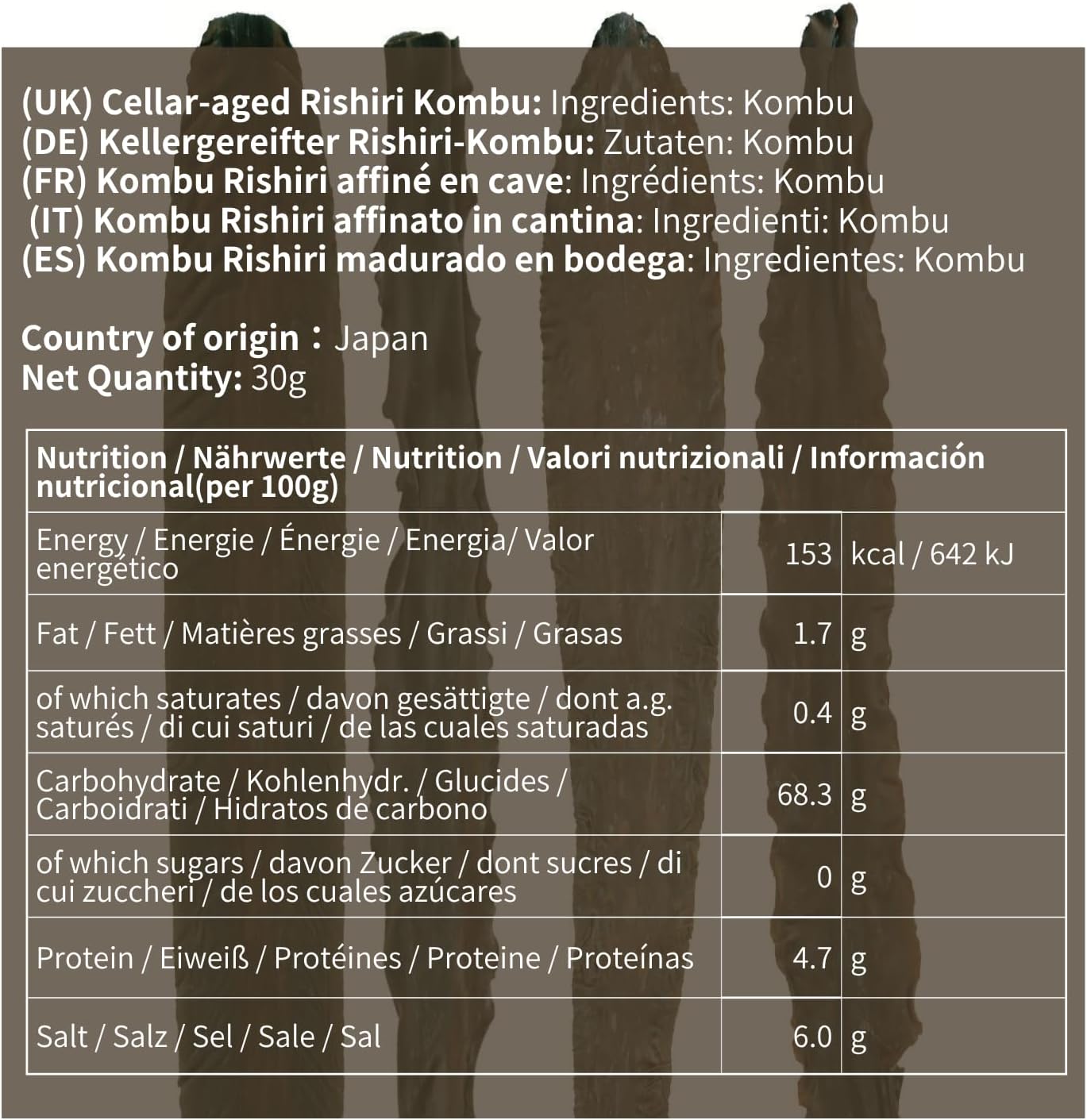
Nettogewicht
Nettogewicht
30 g
Anwendungsempfehlung
・Grundzutaten
Wasser: 300–500 ml
Kombu (getrocknete Seetang): 10 g
※Oberflächlichen Schmutz vorsichtig mit einem fest ausgewrungenen, feuchten Tuch abwischen
・Zubereitungsmethoden (eine auswählen)
Kalt: 6–10 Std. im Kühlschrank ziehen lassen; Kombu entfernen. (Klarer Umami-Geschmack)
Heiß: 30–60 Min. bei ca. 60 °C ziehen lassen; niemals zum Kochen bringen. (Reichhaltiges Aroma)
・Für noch mehr Geschmack
10 g Bonito-Flocken zur Kombu-Brühe geben, 10 Min. knapp unter dem Siedepunkt köcheln und abseihen – für authentischen japanischen Geschmack.
Zutaten
Zutaten
Kombu
Lagerung
Lagerung
Kühl und trocken lagern.
Ursprungsland
Ursprungsland
Japan, Hokkaido

So bereiten Sie authentischen Kombu-Dashi zu
Die Tastrip Kellergereifter Rishiri Kombu wurden mir zur Verfügung und zum Testen gestellt.Positiv- Product of Japan- Die Packung ist wiederverschließbar- Einfache Anwendung- Grundlage für die Dashi-Brühe- Sehr angenehmer Geschmack- Angenehmes AromaNeutral- MHD ca. 1,5 Jahre- 10 Stück in der Verpackung á 3 gNegativ- Anwendungsanleitung nur auf der Produktseite- Leider keine BIO-QualitätPreis/Leistung ist gut. Kaufempfehlung5 Sterne
Good flavour if your really into making your own tradition dashi
This is not the cheapest generic dried seaweed, and that is really the point. It is Rishiri kombu from Japan and is specifically described as cellar-aged, so this is very much a premium version of the ingredient rather than simply a basic packet of dried kelp.The packet is clearly labelled and the ingredient list is reassuringly simple: just kombu. The pieces themselves look substantial and well handled rather than shredded or broken into small fragments, and the overall presentation gives the impression of a traditional Japanese product rather than a generic imported seaweed.Rishiri kombu is particularly prized for making dashi because it gives a clean, refined umami flavour, and the cellar-ageing is intended to further develop and mellow that character. I would not necessarily assume that makes it nutritionally superior to cheaper kombu, but in terms of provenance, handling and culinary quality, this is clearly at the higher end of the scale.The packet also gives useful guidance about storage and notes that a white powdery bloom may naturally appear on the surface. That is not mould, but part of the natural umami-rich compounds in the kombu.This is dried kombu rather than something ready to eat straight from the packet, so it is best suited to rehydrating and using for dashi, soups and other Japanese dishes. It is also worth remembering that kombu can naturally contain a very high amount of iodine, although this particular packet does not state an iodine figure, so I would treat it as a food ingredient rather than something to use casually as an iodine supplement.It is quite expensive for just 30 g, although that is partly what I would expect from a specialist Japanese ingredient of this quality being sold in the UK. It would undoubtedly be cheaper and easier to buy in Japan, but for me the more relevant question is whether the quality justifies the premium here, and I think it largely does.Overall, I think this is a high-quality example of its type. It is more expensive than basic dried kelp, but you are paying for the specific Rishiri variety, Japanese origin and cellar-ageing rather than simply for dried seaweed. For someone who appreciates good ingredients and wants to make proper dashi, I think it is excellent.
- 5 stars: 3 (100%)
- 4 stars: 0 (0%)
- 3 stars: 0 (0%)
- 2 stars: 0 (0%)
- 1 star: 0 (0%)
Die Tastrip Kellergereifter Rishiri Kombu wurden mir zur Verfügung und zum Testen gestellt.Positiv- Product of Japan- Die Packung ist wiederverschließbar- Einfache Anwendung- Grundlage für die Dashi-Brühe- Sehr angenehmer Geschmack- Angenehmes AromaNeutral- MHD ca. 1,5 Jahre- 10 Stück in der Verpackung á 3 gNegativ- Anwendungsanleitung nur auf der Produktseite- Leider keine BIO-QualitätPreis/Leistung ist gut. Kaufempfehlung5 Sterne
This is not the cheapest generic dried seaweed, and that is really the point. It is Rishiri kombu from Japan and is specifically described as cellar-aged, so this is very much a premium version of the ingredient rather than simply a basic packet of dried kelp.The packet is clearly labelled and the ingredient list is reassuringly simple: just kombu. The pieces themselves look substantial and well handled rather than shredded or broken into small fragments, and the overall presentation gives the impression of a traditional Japanese product rather than a generic imported seaweed.Rishiri kombu is particularly prized for making dashi because it gives a clean, refined umami flavour, and the cellar-ageing is intended to further develop and mellow that character. I would not necessarily assume that makes it nutritionally superior to cheaper kombu, but in terms of provenance, handling and culinary quality, this is clearly at the higher end of the scale.The packet also gives useful guidance about storage and notes that a white powdery bloom may naturally appear on the surface. That is not mould, but part of the natural umami-rich compounds in the kombu.This is dried kombu rather than something ready to eat straight from the packet, so it is best suited to rehydrating and using for dashi, soups and other Japanese dishes. It is also worth remembering that kombu can naturally contain a very high amount of iodine, although this particular packet does not state an iodine figure, so I would treat it as a food ingredient rather than something to use casually as an iodine supplement.It is quite expensive for just 30 g, although that is partly what I would expect from a specialist Japanese ingredient of this quality being sold in the UK. It would undoubtedly be cheaper and easier to buy in Japan, but for me the more relevant question is whether the quality justifies the premium here, and I think it largely does.Overall, I think this is a high-quality example of its type. It is more expensive than basic dried kelp, but you are paying for the specific Rishiri variety, Japanese origin and cellar-ageing rather than simply for dried seaweed. For someone who appreciates good ingredients and wants to make proper dashi, I think it is excellent.
Good flavour if your really into making your own tradition dashi